

There are three key elements to understanding the financial position of any business— assets , liabilities, and equity .
Together, these three form the basis of a company’s balance sheet , which shows what the company owns, how much it has borrowed, and the owners’ actual share.
Assets show what resources a company has,
liabilities show what the company owes,
and equity shows what the owners have left after all debts are paid.
The balance of these three factors determines the success, stability, and growth of any business.
Understanding them is essential not only for an accountant or investor, but for every business owner to understand the true financial health of their company.
1. Assets — What the Business Owns
Assets are economic resources owned or controlled by a business that are expected to bring future benefits. They help the company operate, produce goods or services, and generate income.
Types of Assets
A. Current Assets
These are short-term resources that can be converted into cash or used up within one business cycle (usually a year).
Examples:
- Cash & Cash Equivalents: Physical cash, bank balances, and short-term deposits.
- Accounts Receivable: Money owed by customers for goods or services already delivered.
- Inventory: Goods held for sale — raw materials, work-in-progress, and finished goods.
- Prepaid Expenses: Payments made in advance for future services (e.g., rent, insurance).
- Marketable Securities: Short-term investments like government bonds or treasury bills.
B. Non-Current (Fixed) Assets
These are long-term resources used over several years. They are not easily converted to cash.
Examples:
- Property, Plant, and Equipment (PPE): Land, buildings, machinery, and vehicles.
- Intangible Assets: Non-physical items like patents, copyrights, goodwill, and trademarks.
- Long-Term Investments: Investments in other companies or bonds that will be held for over a year.
C. Other Classifications
- Tangible Assets: Physical (land, machines).
- Intangible Assets: Non-physical (brand reputation, software).
- Operating vs. Non-Operating Assets: Used in core business operations vs. unrelated activities.
Why Assets Matter:
Assets indicate a company’s strength, liquidity, and ability to grow. Investors and managers assess how effectively assets are being used to generate profits — a key factor in analyzing efficiency.
2. Liabilities — What the Business Owes
Liabilities are financial obligations a company has to outsiders — debts that must be settled by transferring assets (usually cash) or providing services in the future.
Types of Liabilities
A. Current Liabilities
Obligations due within one year or one operating cycle (whichever is longer).
Examples:
- Accounts Payable: Amounts owed to suppliers or vendors.
- Short-Term Loans: Bank overdrafts, credit lines, or commercial paper.
- Accrued Expenses: Expenses incurred but not yet paid (e.g., salaries, interest).
- Unearned Revenue: Payments received before goods or services are provided.
- Current Portion of Long-Term Debt: The amount of long-term loans due within the next year.
B. Non-Current (Long-Term) Liabilities
Debts that are payable over more than one year.
Examples:
- Bonds Payable: Long-term loans issued to investors.
- Mortgage Payable: Long-term loans backed by property.
- Lease Obligations: Long-term rental agreements under accounting standards.
- Deferred Tax Liabilities: Taxes owed but not yet due.
C. Contingent Liabilities
Potential obligations that depend on the outcome of future events.
Examples: Pending lawsuits, product warranties, or guarantees.
Why Liabilities Matter:
Liabilities show how a company finances its assets — whether through borrowing or using owner’s equity. High liabilities compared to assets can signal financial risk, while moderate liabilities may indicate effective leverage and growth potential.
3. Equity — The Owner’s Interest
Equity represents the residual ownership of a company after all liabilities are paid off. It’s essentially what belongs to the owners or shareholders.
Types of Equity (Depending on Business Type)
A. For Sole Proprietorships:
- Owner’s Capital: Money invested by the owner.
- Drawings (Owner’s Withdrawals): Cash or assets taken out for personal use.
- Retained Earnings: Profits reinvested into the business.
B. For Partnerships:
- Each partner has a separate capital and drawing account.
- Equity is divided based on agreed ownership percentages.
C. For Corporations:
- Common Stock: Represents ownership shares purchased by shareholders.
- Preferred Stock: Shares that pay fixed dividends and have priority over common stock in case of liquidation.
- Additional Paid-In Capital: The amount shareholders pay above the par value of shares.
- Retained Earnings: Cumulative profits not distributed as dividends.
- Treasury Stock: Shares repurchased by the company to reduce supply and increase share value.
Why Equity Matters:
Equity shows the true net worth of a company and determines how much owners would receive if all assets were sold and all debts paid. It’s a key measure of financial stability and long-term value.
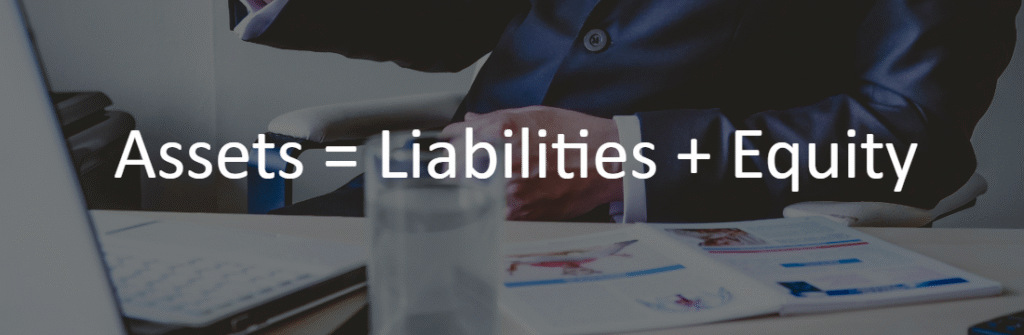
The Accounting Equation
All three components are tied together by this foundational formula: Assets=Liabilities+Equity\text{Assets} = \text{Liabilities} + \text{Equity}Assets=Liabilities+Equity
This means every asset the company owns is financed either through:
- Borrowing (liabilities), or
- Owner investment (equity).
The equation ensures that the balance sheet always stays in equilibrium — every financial transaction affects at least two of these components, keeping the overall system balanced.
Example
Let’s take a simple example for a small company:
| Category | Item | Amount ($) |
|---|---|---|
| Assets | Cash, Inventory, Equipment | 200,000 |
| Liabilities | Bank Loan, Accounts Payable | 120,000 |
| Equity | Owner’s Capital + Retained Earnings | 80,000 |
Now check the equation:
Assets (200,000) = Liabilities (120,000) + Equity (80,000) ✅
If the company earns $20,000 profit and keeps it, equity rises to $100,000. If it takes another $50,000 loan, liabilities rise to $170,000, and assets increase accordingly.
In Summary
| Concept | Meaning | Examples | Represents |
|---|---|---|---|
| Assets | What the business owns | Cash, equipment, property, inventory | Resources used to generate income |
| Liabilities | What the business owes | Loans, accounts payable, accrued expenses | Obligations and debts |
| Equity | What’s left for owners after paying debts | Owner’s capital, retained earnings | Ownership interest or net worth |
Assets, liabilities, and equity are the fundamental pillars of any business’s financial health.
Assets represent what a company owns, liabilities represent what it owes, and equity represents how much ownership is actually held by owners.
The balance of these three ensures that the company’s balance sheet always remains equal – Assets = Liabilities + Equity\text{Assets = Liabilities + Equity}Assets = Liabilities + Equity
If a company manages its assets and liabilities correctly, its equity increases and it becomes financially strong.
Therefore, understanding and balancing these three is crucial for any successful business.
#Finance #Accounting #Assets #Liabilities #Equity #BalanceSheet #BusinessFinance #FinancialEducation #InvestmentBasics #BusinessGrowth #Anslation #Carrerbook #Economics #MoneyManagement
Leave a Reply