
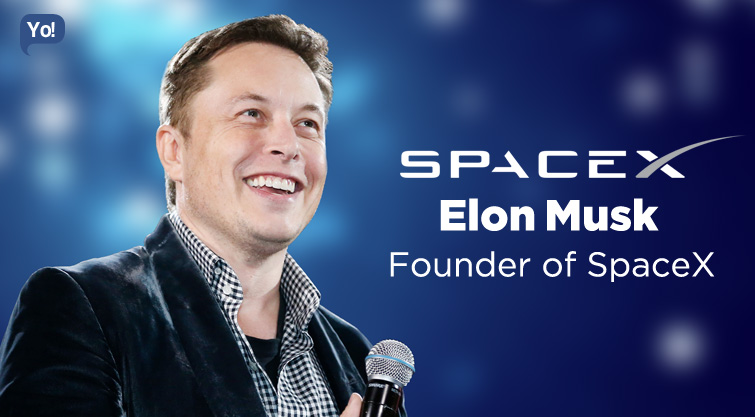
Elon Musk Just the name conjures up images of electric cars, rockets, and underground tunnels. He’s more than just a CEO; he’s a modern-day industrial revolutionary who has fundamentally altered how we think about transportation, energy, and even the future of humanity.
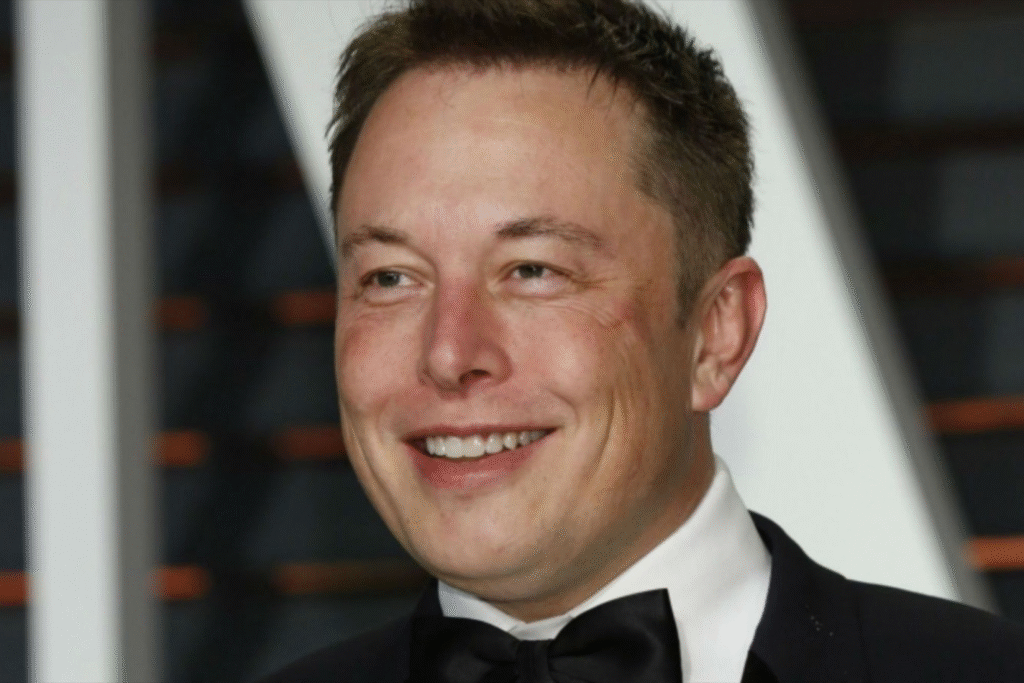
If you read the news, you know his work spans multiple, massive industries. But what truly defines his legacy isn’t just one company, like Tesla or SpaceX; it’s the sheer audacity of his vision and his commitment to tackling what were once considered impossible problems.
In this post, we’re going to look at how he is dramatically reshaping both the technological landscape right here on Earth and the vast expanse of space.
I. Redefining Space Travel: The SpaceX Revolution
For decades, space exploration was the sole domain of government agencies, like NASA or Roscosmos. It was slow, incredibly expensive, and often based on decades-old technology. Then came SpaceX. Musk’s company didn’t just aim to build rockets; it aimed to completely overhaul the economics of space travel.
Core Innovations in Space:
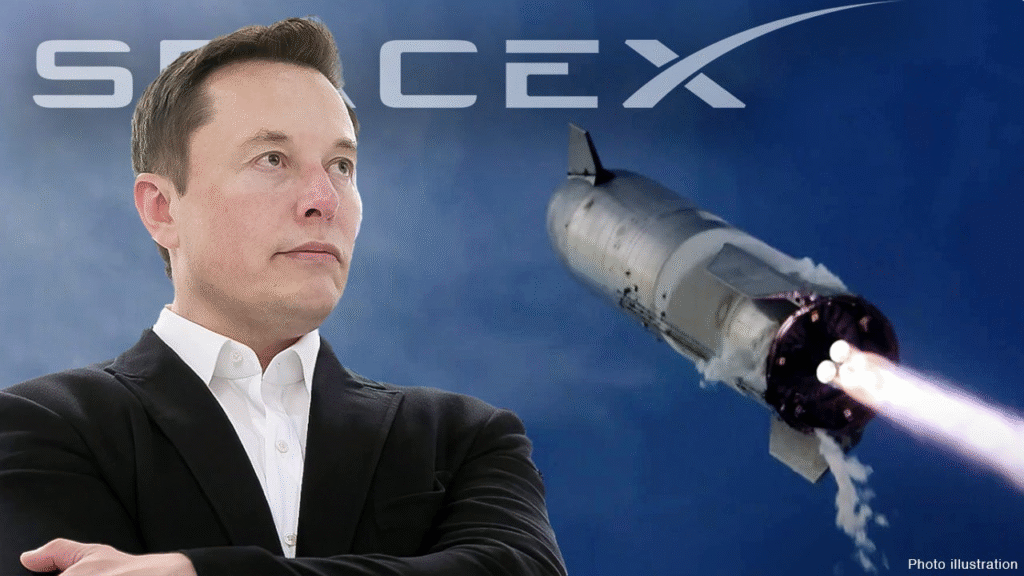
- Rocket Reusability: This is the single biggest game-changer. By developing the Falcon 9 rocket and teaching it to land itself upright, SpaceX pioneered the ability to reuse the first stage booster. This is analogous to reusing an airplane, drastically cutting the cost of getting objects (and eventually people) into orbit.
- The Ultimate Goal: Mars Colonization: The entire operation is ultimately geared toward making humanity a multi-planetary species. This mission is encapsulated in the development of Starship, a fully reusable mega-rocket designed to carry hundreds of people and tons of cargo to the Moon, Mars, and beyond.
- Global Internet Access (Starlink): SpaceX is deploying thousands of small satellites in low Earth orbit (LEO) to create the Starlink constellation. This network provides high-speed, low-latency broadband internet, particularly to remote or underserved areas, effectively connecting the entire globe from space.
II. Transforming Personal Transportation and Energy
While rocketry might seem futuristic, Musk’s most immediate and widespread impact is undoubtedly felt through Tesla. Before this company, electric vehicles (EVs) were often viewed as niche, slow, or lacking in style and performance. Tesla didn’t just build an electric car; it built an electric car people wanted to drive.
Impact on Earth Industries (Tesla & Energy):
- Performance EVs: Tesla shattered the perception that EVs must be compromises. Models like the Model S demonstrated instant torque and high performance, forcing the entire global automotive industry to pivot toward electrification much faster than anticipated.
- Software-Defined Cars: Tesla vehicles receive over-the-air software updates, meaning a car can get new features or performance improvements overnight, making them more like rolling computers than traditional machines.
- Integrated Energy Solutions: Tesla is an energy company, not just a car manufacturer. Their work with Powerwall (home storage) and Megapack (utility-scale storage) addresses the need to store intermittent energy from solar and wind, creating a unified ecosystem for a decarbonized future.
- Autonomy: The pursuit of Full Self-Driving (FSD) capability, while controversial, pushes the boundaries of real-world AI and computer vision, aiming to make roads safer and revolutionize personal mobility.
III. Pushing the Frontiers of Human-Machine Interaction
Beyond space and sustainable energy, Musk has founded companies that tackle what many consider the most complex technological challenges in their respective fields: the human brain and urban infrastructure.
Frontier Technologies and Future Projects:
- Neuralink: Brain-Computer Interfaces: This company is developing ultra-high-bandwidth brain-machine interfaces. The long-term goal is to solve various neurological disorders, but the philosophical aim is to allow humans to keep pace with advanced Artificial Intelligence (AI) by creating a direct cognitive link.
- The Boring Company: Urban Congestion: Founded to combat “soul-crushing urban traffic,” this venture focuses on creating fast, affordable underground tunnels. The system envisions vehicles or pods moving at high speeds in a network of loops, completely rethinking mass transit and intercity travel like the conceptual Hyperloop.
- The AI Perspective (xAI): Musk also recently launched xAI with the goal of understanding the true nature of the universe. This venture underlines his belief that advancing and managing AI responsibly is an existential necessity for humanity.
Final Takeaway: The First Principles Approach
Musk’s remarkable ability to disrupt multiple sectors stems from his reliance on First Principles Thinking. Instead of looking at what is currently possible (the common analogical reasoning), he breaks down complex systems to their fundamental laws of physics and re-engineers them from scratch. This is how he concluded that a rocket’s reusable parts could dramatically reduce cost, or that a car is best built as a software platform. His work, driven by a mission to ensure the survival and prosperity of humanity, is undeniably defining the technological landscape for generations to come.
Elon Musk’s Key Ventures and Contributions
| Company Name | Core Industry / Focus Area | Key Contribution / Innovation | Long-Term Vision / Objective |
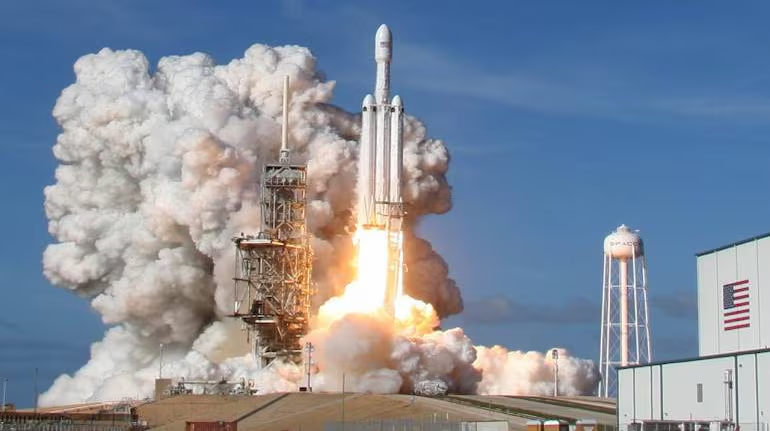
| SpaceX (Founded 2002) | Aerospace & Space Exploration | Pioneering Reusable Rocket Technology (Falcon 9 & Falcon Heavy) to drastically lower the cost of space access. | Making humanity a multi-planetary species by colonizing Mars with the Starship system. |
| Tesla (Joined 2004) | Electric Vehicles (EVs) & Sustainable Energy | Bringing high-performance, long-range Electric Cars (Model S, 3, X, Y) into the mainstream. Significant advancements in Battery Technology and Full Self-Driving (FSD) AI. | Accelerating the world’s transition to sustainable energy (through EVs, Powerwall, and Solar). |
| Starlink (Division of SpaceX) | Satellite Internet | Deploying a massive constellation of low-Earth orbit (LEO) satellites to provide global high-speed broadband internet. | Connecting remote and underserved parts of the world and generating revenue to fund the Mars mission. |
| Neuralink (Founded 2016) | Neurotechnology & Medical Devices | Developing ultra-high-bandwidth Brain-Machine Interfaces (BMIs) or “brain chips.” | Treating neurological disorders and achieving human-AI symbiosis (merging human consciousness with AI). |
| The Boring Company (Founded 2016) | Infrastructure & Transit | Developing technology to dig tunnels much faster and cheaper to alleviate urban traffic congestion via “Loop” systems. | Creating a fully functional underground Hyperloop transport system for high-speed inter-city travel. |
| xAI (Founded 2023) | Artificial Intelligence | Developing a new form of AI with a goal to understand the true nature of the universe. | Competing with current models to create safe and beneficial Artificial General Intelligence (AGI). |
Early Foundational Ventures (The Pre-SpaceX & Tesla Era)
| Company Name | Contribution | Outcome |
| Zip2 (Co-founded 1995) | Provided online business directories and maps for newspapers. | Sold to Compaq for $307 million in 1999. |
| X.com / PayPal (Co-founded 1999) | One of the world’s first internet payment systems, which later became PayPal. | Acquired by eBay for $1.5 billion in 2002. |
#ElonMusk #SuccessStory #Motivation #Inspiration #EntrepreneurLife #TechGenius #SpaceX #Tesla #Innovation #Carrerbook#Anslation#Leadership #BillionaireMindset #DreamBig #NeverGiveUp #VisionaryLeader #SuccessMindset #HardWorkPaysOff #FutureTech #SelfMade #ElonMuskQuotes #MotivationalStory
Leave a Reply